Redefining platinum group metal refining
Our next-generation PGM refinery will shape the future of sustainable refining for a circular economy.
For over two centuries, platinum group metal (PGM) refining has been at the heart of what we do, recycling critical metals so they can be used in applications that surround and enhance our daily lives. And now, we’re redefining how it’s done.
Introducing our third-century refinery, 3CR.
A new benchmark for
Our state-of-the-art facility is built to recycle the world’s precious metals and deliver for our customers, time and time again. Packed with world-leading technology, equipment and systems that increase capacity and flexibility of our operations, it will allow us to handle a greater range of complex feeds and manage peak flows effectively.
Already today, almost 60% of the PGMs used globally in new products is recycled metal, and with new industrial uses on the horizon, this figure is set to grow. By revolutionising the refining process, we can ensure these vital metals are available to meet demands through their circular and sustainable use.
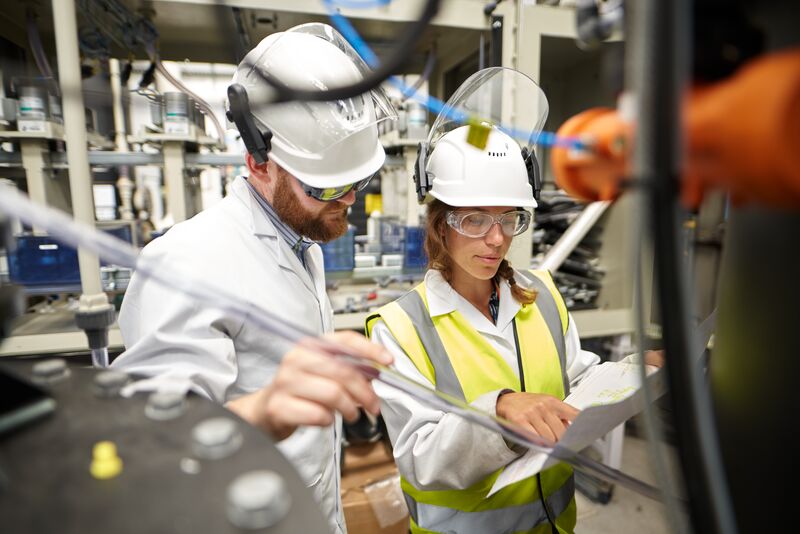
A step change in safety
and sustainability
The new plant will be one of the most sophisticated PGM facilities in the world, replacing the ageing refinery in Royston, UK. It has been designed to put our people’s safety first, with a step change in preventative measures and better ways of working.
It will deliver a dramatically reduced environmental impact, including significant reductions in energy use and less hazardous waste.
less hazardous waste each year
reduced platinum salt sensitivity risk level - equivalent to a coffee bean in the empire state building
lower greenhouse gas emissions
Frequently asked questions
What is the third-century refinery (3CR)?
Johnson Matthey's new refinery is a world-class facility being built in Royston, UK, where platinum group metals are separated into final product form through a multistage process. It will replace the ageing refinery that already exists in Royston, significantly boosting our capacity, efficiency and sustainability.
When will 3CR become operational?
Johnson Matthey's new refinery, 3CR, is expected to be operational in calendar year 2027.
Why is Johnson Matthey investing in a new PGM refinery?
Refining is at the heart of Johnson Matthey. Given the expected growth in recycling platinum group metals from secondary sources, we’re investing to replace our ageing refinery with a state-of the-art facility, which will ensure circularity of these precious metals so they are available to meet future demands. The new refinery will provide a step change in technology to improve safety, efficiency and flexibility for our customers, as well as new growth opportunities.
What will happen to Johnson Matthey’s existing Royston refinery?
The existing Royston refinery will be decommissioned gradually as the new refinery becomes operational.
Which platinum group metals will Johnson Matthey’s new refinery process?
As the existing refinery does today, JM’s new refinery will process all of the PGMs (platinum, palladium, rhodium, iridium, and ruthenium) to separate them into final product form.
How will Johnson Matthey’s new refinery improve the platinum group metal refining process?
The four stages of the refining process will, overall, be the same: the first three stages (evaluation, smelting and chemical leaching) will still take place at our Brimsdown, UK facility, then the feed moves to our new refinery in Royston for the final chemical separation. But the new refinery, along with investments in our Brimsdown site, will improve the safety, efficiency and flexibility of our overall process for our customers.
What are the safety, sustainability and operational benefits of Johnson Matthey’s new refinery?
The cutting-edge technology in the new refinery, including the processes, systems and equipment, have been designed to:
- Increase capacity and flexibility to processes more complex feeds and manage refining flows
- Drastically improve safety for our people
- Significantly reduce the environmental impact
How does platinum group metal refining support the circular economy?
Platinum group metals are geologically rare and only mined in relatively small quantities. So to serve industrial demands for their vast applications, often where no other material can match their performance, recycling PGMs is equally as important as mining.
This is particularly true as we look ahead to the growing industrial need for these metals for areas like energy, healthcare, digital technology and aviation, which cannot be sustainably met through mining alone.
How does recycling platinum group metals reduce environmental impact?
Recycling platinum group metals has a significantly lower carbon footprint compared to the mining process: today, the carbon intensity of recycled PGM is about 97% lower than that of newly mined metal. PGMs can be recycled many times and remain in use indefinitely, because recycling does not change the physical properties or how the PGM can be used.